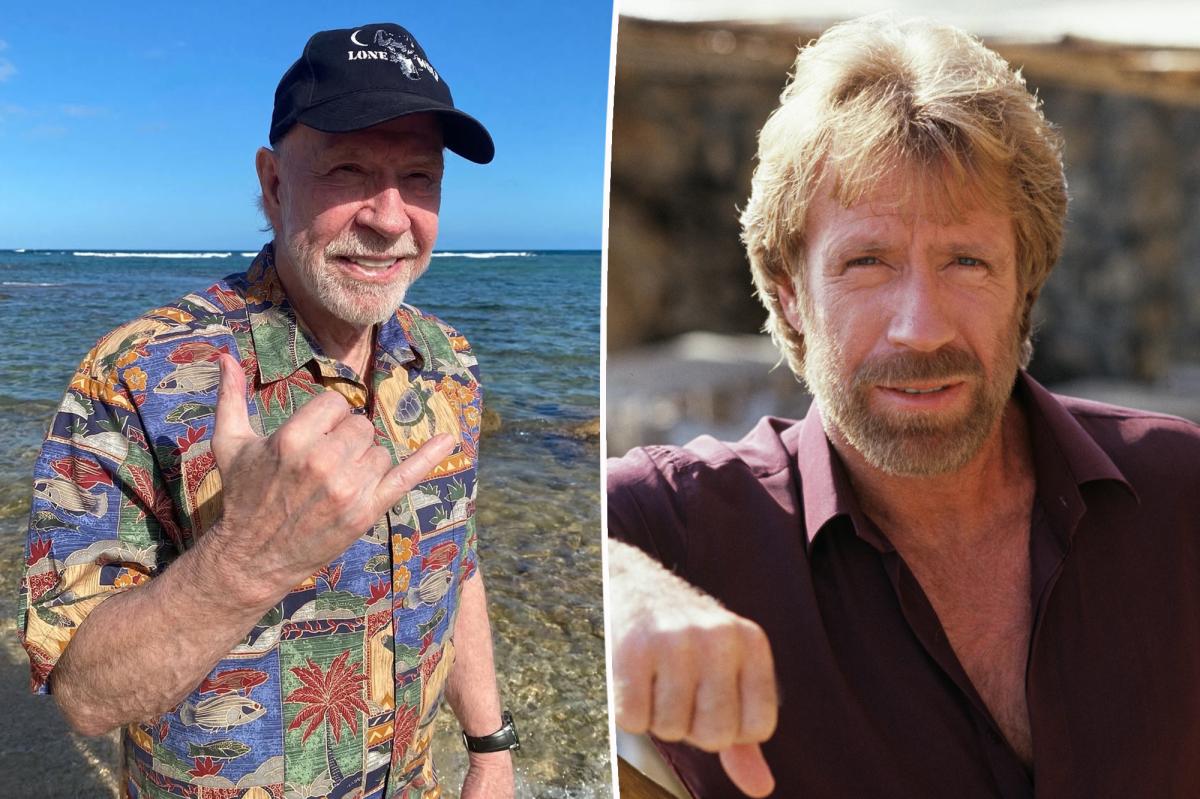
Chuck Norris Dead at 86: Remembering the Action Star's Legacy
The world of action cinema and martial arts has lost a true legend. Chuck Norris, the iconic American actor, martial artist, and cultural phenomenon, has passed away at the age of 86. His family confirmed the news on Friday, stating that he died peacefully, surrounded by his loved ones. While the exact circumstances remain private, the announcement sent ripples across the globe, as fans and fellow entertainers mourned the loss of a man who embodied strength, discipline, and an unparalleled on-screen presence.
In a heartfelt Instagram post, his family shared their grief and admiration: "For the world, he was a martial artist, actor, and a symbol of strength. For us, he was a devoted husband, a loving father and grandfather, an incredible brother, and the heart of our family." This statement perfectly encapsulates the multifaceted life of Carlos Ray Norris, a man whose journey from a humble beginning in Oklahoma to international superstardom is a testament to perseverance and unwavering commitment. His passing marks the end of an era, but his influence, both in Hollywood and in the collective consciousness of the internet, is sure to endure.
The Man Behind the Legend: Early Life and Martial Arts Mastery
Born on March 10, 1940, in Ryan, Oklahoma, Chuck Norris's early life was far removed from the glitz and glamour of Hollywood. His family, with roots tracing back to Irish immigrants and the Cherokees, instilled in him a strong sense of identity and resilience. After graduating from high school, Norris enlisted in the U.S. Air Force in 1958, serving as a military policeman in Texas. It was during his deployment to the Osan Air Base in South Korea that his life took a pivotal turn.
Seeking a way to channel his energy and learn self-defense, Norris began studying Judo. This initial foray into martial arts ignited a passion that would define his life. He soon transitioned to Tang Soo Do, a Korean variant of Karate, dedicating himself wholeheartedly to its mastery. Despite suffering numerous injuries, including fractured shoulders, hands, and a broken nose, he persevered, eventually earning a black belt. His relentless training and competitive spirit led him to the (unofficial) World Professional Karate Championships, where he achieved the title of Middleweight World Champion.
Upon his discharge from the military police service in 1962, Norris moved to California and leveraged his martial arts expertise by opening a karate school. This dojo quickly attracted a diverse clientele, including future Hollywood stars. One notable student was Steve McQueen, who recognized Norris's unique charisma and encouraged him to pursue acting. McQueen's advice was simple yet profound: "He told me to make sure I showed presence and never to accept a role with a lot of dialogue," Norris recounted in a 1985 interview with the *New York Times*. This guidance would prove invaluable as Norris navigated his transition from martial arts master to action hero, a journey beautifully explored in
Chuck Norris's Life: Martial Arts Master and Hollywood Hero.
From Martial Artist to Hollywood Icon: A Career Defined by Action
Chuck Norris's entry into the film industry was catalyzed by another martial arts legend: Bruce Lee. In 1968, Lee provided Norris with his first minor film appearance, recognizing the power and authenticity Norris brought to the screen. Their on-screen chemistry culminated in one of cinema's most iconic fight scenes, with Norris playing Lee's formidable antagonist in the 1972 classic, *Way of the Dragon* (originally titled *The Return of the Dragon*). This role cemented Norris's reputation as a genuine martial artist who could hold his own against the best.
The late 1970s and 1980s saw Norris carve out his niche as a leading man in action cinema. His 1976 film, *Breaker! Breaker!*, where he played a trucker thwarting a corrupt judge's plans, quickly grossed $13 million, signaling his growing box-office appeal. The following year, *Good Guys Wear Black* (1977) further solidified his status, with Norris portraying a Vietnam veteran using deadly karate strikes from a moving car to dispatch enemies – a true testament to his unique action style.
Norris frequently embodied the "tough guy" persona, often compared to cinematic stalwarts like Clint Eastwood's "Dirty Harry" or Charles Bronson. He became synonymous with justice served through relentless physical prowess. The three-part *Missing in Action* series in the 1980s, where he played Colonel James Braddock, a Vietnam veteran on a mission to rescue POWs, became a defining franchise, showcasing his blend of stoicism, combat expertise, and a moral compass aimed squarely at righting wrongs. These films resonated deeply with audiences, cementing his place as a go-to star for no-nonsense action.
Television Stardom and the Digital Age Phenomenon
While his film career thrived, Chuck Norris's most pervasive and enduring legacy for many came through the small screen. From 1993 to 2001, Norris starred in and produced the hugely successful television series *Walker, Texas Ranger*. As Ranger Cordell Walker, Norris brought his signature martial arts skills and unwavering sense of justice to the American heartland. The show became a global phenomenon, airing in countless countries and solidifying Norris's image as a moralistic, ass-kicking lawman. *Walker, Texas Ranger* wasn't just a TV show; it was a cultural touchstone, demonstrating Norris's ability to connect with a mass audience through consistent character and thrilling action.
Perhaps even more remarkably, Norris's fame experienced an unexpected resurgence in the internet age, long after his peak in film and television. Beginning around 2005, a myriad of humorous internet memes known as "Chuck Norris Facts" began circulating. These hyperbolic, often absurd claims about Norris's superhuman abilities – "Chuck Norris doesn't do push-ups, he pushes the Earth down" or "Chuck Norris can divide by zero" – turned him into an unlikely digital icon. This phenomenon introduced him to a new generation and cemented his status as a figure of exaggerated, invincible strength, transcending his actual cinematic achievements. The journey from his iconic role as Cordell Walker to becoming an internet meme is a fascinating aspect of his career, highlighted in detail in
Chuck Norris: From Walker, Texas Ranger to Meme Icon.
Remembering a Legacy of Strength, Dedication, and Humor
Chuck Norris's life was a masterclass in building a unique brand through consistent effort and a clear identity. His journey from an aspiring martial artist in the military to an international action star and internet legend offers several enduring insights:
*
The Power of Discipline: Norris's martial arts background wasn't just a skill; it was a philosophy that permeated his life and career. His dedication to training, even through injuries, laid the foundation for his success and provided the authenticity that audiences craved in his action roles.
*
Embrace Your Niche: While some actors strive for versatility, Norris understood his strengths. He honed his "tough guy" persona, delivering action that was visceral and direct, and in doing so, created a distinct and memorable presence in a crowded industry.
*
Longevity Through Reinvention: From film to television to internet memes, Norris demonstrated an uncanny ability to remain relevant across different eras and platforms. His willingness to embrace or at least tolerate the "Chuck Norris Facts" phenomenon showed a surprising sense of humor and contributed significantly to his lasting pop culture footprint.
*
Beyond the Screen: Despite his formidable on-screen characters, his family's statement reminds us of the man behind the persona: a devoted husband, father, and grandfather. This balance of public image and private values resonated deeply with his fans.
Norris remained active in his later years, making occasional appearances, though less frequently than in his prime. He was also an outspoken political figure, notably a known supporter of Donald Trump. While his political views were a public aspect of his life, his legacy is predominantly defined by his contributions to martial arts and entertainment.
Conclusion
Chuck Norris's passing at 86 marks the end of a remarkable life that touched millions. From the dusty plains of Oklahoma to the martial arts dojos of Korea, the film sets of Hollywood, and the screens of countless homes, his journey was extraordinary. He was more than just an actor; he was a symbol of unwavering strength, an innovator in martial arts cinema, and, unexpectedly, a source of digital-age humor. His dedication to his craft, his family, and his unique persona leaves an indelible mark. Though he may be gone, the legend of Chuck Norris, the man whose kicks could roundhouse the moon, will undoubtedly live on in the annals of cinema and pop culture history.